







Recent Public Posts - [guest]
| Re: New Oxford - Bristol direct service, ongoing developments and discussion In "Oxford, Didcot and Reading from the West" [375000/28355/22] Posted by TaplowGreen at 21:15, 10th May 2026 |      |
... the same shortages over summer as every year, especially on Sundays as the DfT are still sitting on the Sunday in the working week proposals.
Purely out of idle curiosity on my part: do any of those

Hmmmmm......civil servants with Sunday in the working week........now there's a thought! (Or indeed any time after around 3pm on a Friday!)

| Re: Problems with Hitachi Intercity Express Trains - discussions from 1 January 2026 onwards In "Across the West" [374999/31357/26] Posted by ChrisB at 21:12, 10th May 2026 | |
I tried to post into this thread, but it won't let me - no reply or quote button!!
https://www.firstgreatwestern.info/coffeeshop/index.php?topic=24934.msg374137#new
BUT the IETs are getting new seats....
From Rail Business UK
Great Western passengers feel the joys of spring
UK: Great Western Railway is testing the EcoSeat developed by British spring manufacturer Spinks and rail seat specialist Quantum Seating, which uses pocket spring technology more commonly found in mattresses.

The EcoSeat is 100% recyclable, eliminates the need for polyurethane foam and achieves rail safety standards without flame retardant chemicals.
Mattress and furniture spring manufacturer Spinks was awarded £250 000 from the Department for Transport and Innovate UK’s First of a Kind programme to bring its EcoSeat glue-free pocket microcoil technology to the rail market. Following the production of prototypes, GWR and leasing company Angel Trains are now undertaking testing on the routes from Exeter to Exmouth and Paignton.
Speaking to Rail Business UK at the 2025 RIA Rail Innovation Conference, Spinks said the springs used on train seats in the past were much larger than ones that are available now. Springs had been displaced by cheaper foams, but the price has crept up as fire and other standards became stricter meaning that springs are now competitive on price while also offering a longer life, lower environmental impact and full recyclability.
‘We are pleased to see our EcoSeat technology being trialled in a real-world rail environment’, said John Pick, Seating Project Manager at Spinks, when the trials with GWR got underway. ‘The pocket spring system creates a comfortable, fully recyclable seat that’s designed for durability while meeting safety standards.’
GWR said ‘we are always interested in exploring innovative technologies that could enhance passenger experience and sustainability across our network. This trial allows us to assess new seating options in real-world conditions on our Exeter services, and we’ll be monitoring performance and gathering passenger feedback.’
UK: Great Western Railway is testing the EcoSeat developed by British spring manufacturer Spinks and rail seat specialist Quantum Seating, which uses pocket spring technology more commonly found in mattresses.
The EcoSeat is 100% recyclable, eliminates the need for polyurethane foam and achieves rail safety standards without flame retardant chemicals.
Mattress and furniture spring manufacturer Spinks was awarded £250 000 from the Department for Transport and Innovate UK’s First of a Kind programme to bring its EcoSeat glue-free pocket microcoil technology to the rail market. Following the production of prototypes, GWR and leasing company Angel Trains are now undertaking testing on the routes from Exeter to Exmouth and Paignton.
Speaking to Rail Business UK at the 2025 RIA Rail Innovation Conference, Spinks said the springs used on train seats in the past were much larger than ones that are available now. Springs had been displaced by cheaper foams, but the price has crept up as fire and other standards became stricter meaning that springs are now competitive on price while also offering a longer life, lower environmental impact and full recyclability.
‘We are pleased to see our EcoSeat technology being trialled in a real-world rail environment’, said John Pick, Seating Project Manager at Spinks, when the trials with GWR got underway. ‘The pocket spring system creates a comfortable, fully recyclable seat that’s designed for durability while meeting safety standards.’
GWR said ‘we are always interested in exploring innovative technologies that could enhance passenger experience and sustainability across our network. This trial allows us to assess new seating options in real-world conditions on our Exeter services, and we’ll be monitoring performance and gathering passenger feedback.’
| Re: On tour, May 2026, Grahame In "The Lighter Side" [374997/31997/30] Posted by Chris from Nailsea at 18:16, 10th May 2026 | |
Apologies to any forum members who might have known that without half an hour's on-line research.
I did, and didn't, if you see what I mean.


| Cramlington train derailment centenary events 'not a celebration' - 10 May 1926 In "Railway History and related topics" [374995/32009/55] Posted by Chris from Nailsea at 18:03, 10th May 2026 | |
'On this day' - from the BBC:
Centenary of train derailment 'not a celebration'
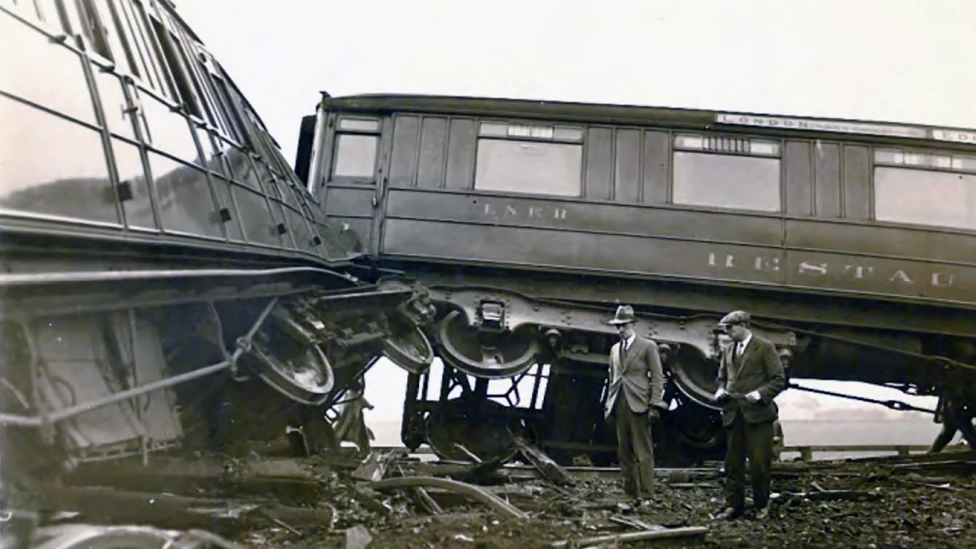
Miners had intended to derail a cargo train carrying coal, which they saw as a threat to strike action - Image © Working Class Movement Library
Events marking the centenary of a passenger train derailment are not a celebration but an acknowledgement of the impact on the community, one of the organisers has said.
Striking miners sabotaged the London to Edinburgh mainline at Cramlington, Northumberland, hoping to prevent a coal train from reaching its destination. But on 10 May 1926, during the General Strike, they unintentionally derailed the Flying Scotsman which was carrying 281 passengers.
Ahead of a series of commemorative walks, Maggie Martin from Cramlington Town Council said: "What we wanted to look at was how what happened to them after affected their families and everyone who lived here."
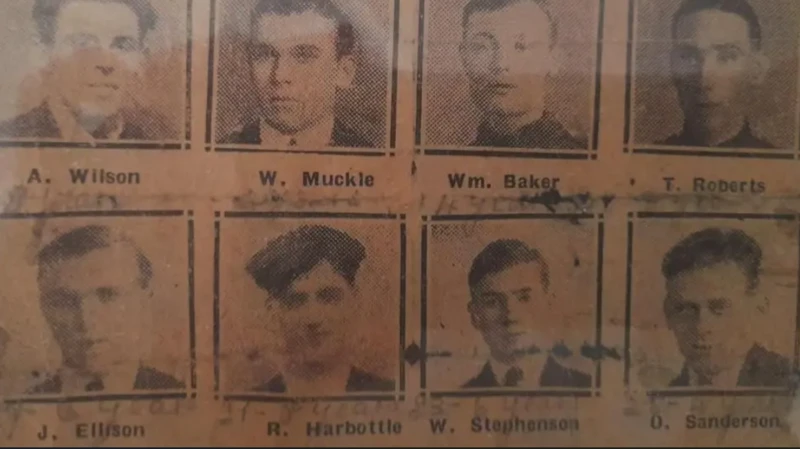
Eight men were sent to prison following the derailment
Although the train came off the tracks, the driver - who had been alerted to possible trouble ahead - was already slowing down so passengers only sustained minor injuries, mostly shock and bruises.
Eight Cramlington miners were ultimately sentenced to eight years in prison as a result, but were released early after pressure from the trade unions.
Cramlington Heritage Hub organised free commemorative walks during the day in Alexandra Park which, in 1926, was the site of West Cramlington Colliery. The tours visited key historical sites, ending on a bridge overlooking the derailment site itself.
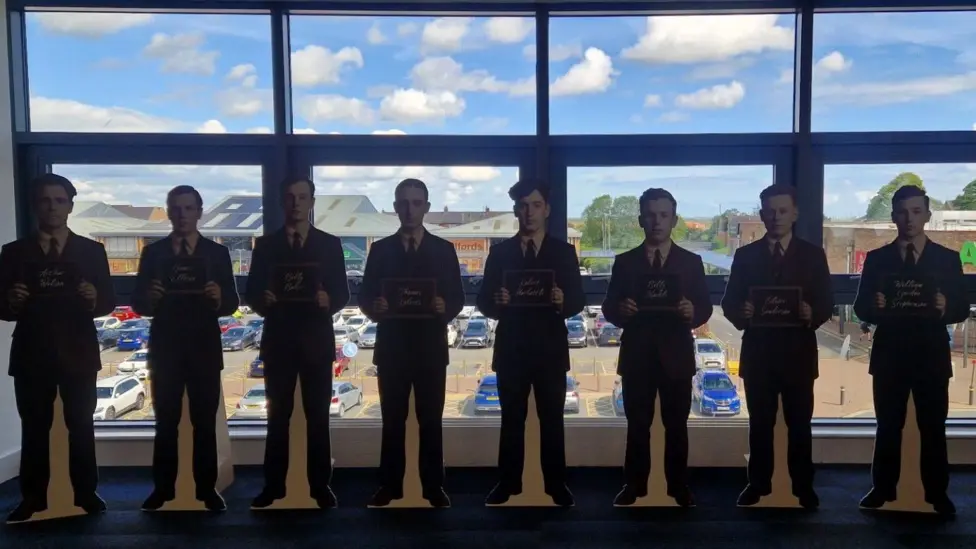
An exhibition at Cramlington tells the story of the convicted miners - Image © Maggie Martin
There is also an exhibition at the hub which includes life size images of those convicted alongside poems and paintings from students at Cramlington Learning Village reflecting on what happened.
Martin said there were people in the area who are descended from the imprisoned miners, or who remember meeting them later in life. "The prisoners were sent down to Maidstone, so the families did fundraising events to raise money to visit them," she said. "It was such a huge thing for the area, everyone in Cramlington would have been involved in some way or another."
Miners had intended to derail a cargo train carrying coal, which they saw as a threat to strike action - Image © Working Class Movement Library
Events marking the centenary of a passenger train derailment are not a celebration but an acknowledgement of the impact on the community, one of the organisers has said.
Striking miners sabotaged the London to Edinburgh mainline at Cramlington, Northumberland, hoping to prevent a coal train from reaching its destination. But on 10 May 1926, during the General Strike, they unintentionally derailed the Flying Scotsman which was carrying 281 passengers.
Ahead of a series of commemorative walks, Maggie Martin from Cramlington Town Council said: "What we wanted to look at was how what happened to them after affected their families and everyone who lived here."
Eight men were sent to prison following the derailment
Although the train came off the tracks, the driver - who had been alerted to possible trouble ahead - was already slowing down so passengers only sustained minor injuries, mostly shock and bruises.
Eight Cramlington miners were ultimately sentenced to eight years in prison as a result, but were released early after pressure from the trade unions.
Cramlington Heritage Hub organised free commemorative walks during the day in Alexandra Park which, in 1926, was the site of West Cramlington Colliery. The tours visited key historical sites, ending on a bridge overlooking the derailment site itself.
An exhibition at Cramlington tells the story of the convicted miners - Image © Maggie Martin
There is also an exhibition at the hub which includes life size images of those convicted alongside poems and paintings from students at Cramlington Learning Village reflecting on what happened.
Martin said there were people in the area who are descended from the imprisoned miners, or who remember meeting them later in life. "The prisoners were sent down to Maidstone, so the families did fundraising events to raise money to visit them," she said. "It was such a huge thing for the area, everyone in Cramlington would have been involved in some way or another."
| Re: On tour, May 2026, Grahame In "The Lighter Side" [374994/31997/30] Posted by eightonedee at 17:54, 10th May 2026 Already liked by Red Squirrel | |
...back to today's quiz picture.
I thought that a quick Google search "belgian tram museums" would get me straight there, but no, there are several, it appears. Then checking Grahame's itinerary again, it has to be Antwerp's (and lo! checking its website, there is car no. 6451, prominently feature).
Apologies to any forum members who might have known that without half an hour's on-line research.
| Re: New Oxford - Bristol direct service, ongoing developments and discussion In "Oxford, Didcot and Reading from the West" [374993/28355/22] Posted by Chris from Nailsea at 17:32, 10th May 2026 | |
... the same shortages over summer as every year, especially on Sundays as the DfT are still sitting on the Sunday in the working week proposals.
Purely out of idle curiosity on my part: do any of those
| Re: Thames Valley infrastructure problems causing disruption elsewhere - 2026 In "Across the West" [374992/31163/26] Posted by ChrisB at 16:22, 10th May 2026 | |
Piccadilly Line was already shut owing to Engineering Work.
With no trains to Heathrow, it was Circle/District to Hammersmith & a bus this morning - or out from Waterloo to somewhere with a bus connection.
| Re: 13th December 2026 - Great Western returns to public ownership In "Across the West" [374991/31999/26] Posted by Electric train at 16:21, 10th May 2026 Already liked by Mark A | |
(Asking more in hope than expectation) - can anyone tell me how this, and GBR in general, will result in a better experience for customers?
Before I retired in Oct 2025 I was a senior Engineer in the Kent Route, Southern Region of Network Rail.
In July 2025 Southeastern Trains was brough back into public ownership. When this happened a new Executive Board was formed to run South Eastern Railway. The MD of Southeastern Trains took the roll of MD South Eastern Railway, the NR Kent Route MD became the Chief Operating Officer, as the Route MD he had maintenance, asset management, signallers, Electrical Control Rooms in his responsibility, as the new COO he now has Drivers and fleet maintenance.
At an exec level NR major stations and SET station were brought together.
There are other examples where things are being aligned, regrettably some NR and SET staff are getting displaced (ie potential redundancies) where there was duplication of rolls, places like delay attribution, route control etc.
The better experience to the customer will come from the removal of the contractual stresses between NR and the TOC's the delay attribution (schedule
 these are just wooden dollars (Financial/Business Slang: An idiom meaning worthless, unreal, or purely internal money/profit, often used to describe pointless disputes over internal cost allocations) It could be argued, which is the argument the Government made, that this how the TOC parent companies made their profit; so the benefit to customers is a reduction in operating costs.
The joining of track and train in a common management structure has already resulted in better track access for NR in Kent because the "contractual" tension has been remove, when there are incidents and delays again because the contractual tension has been removed the incident / delay is managed more efficiently.
Timetable changes are quicker allowing for timing adjustments all of the because it is one "company"
The South Eastern Railway is still an Executive Board employees of NR and SET are still employed by their respective companies and work to their respective contracts of employment; but the new exec board is facilitating meeting and better cooperation at lower management levels, something that was lacking in my time in my last job was being able to talk to my counter part TOC engineer without having commercial managers controlling the meeting.
Basically the "vertical" integration of the railway management structure should bring a more efficient, right time railway which should keep the fares down.
Even John Major favoured a return to regional, vertically integrated "grouping" systems, similar to the pre-1948 "Big Four" railway companies.
"I support vertical integration" is not prominent in the search results, his overall aim for the reforms was improved efficiency, and he has defended the resulting structure while acknowledging the need for collaboration
Although it was his Government that oversaw the privatisation and fragmentation of British Rail into a complex, non-vertically integrated structure in the 1990s, this resulted in BR being broken up into over 100 companies | Re: 13th December 2026 - Great Western returns to public ownership In "Across the West" [374990/31999/26] Posted by REVUpminster at 13:13, 10th May 2026 | |
Maybe they will actually work with SWR to improve Exeter to Salisbury. They didn't do much when both part of First Group.
| Re: New Oxford - Bristol direct service, ongoing developments and discussion In "Oxford, Didcot and Reading from the West" [374989/28355/22] Posted by IndustryInsider at 12:56, 10th May 2026 Already liked by Mark A, grahame | |
From where will the additional rolling stock and crews be found to run these services without shortforming/cancelling others?
175s in Cornwall cascading some IETs. Who knows - Hungerford / Kintbury / Bedwyn may get back their hourly London train. Not sure on crews - perhaps staff will feel patriotic and be prepared to do more overtime if they're working for the nation.
Oxford depot drivers are signing the route, and will share the work with Bristol and Paddington (AIUI). At Oxford depot there has been slack for a while now, but they were unable to help out much with the routes that have traditionally struggled with crew as they only went as far west as Swindon.
Plus a lot of trainees are going through the system at the moment.
Though I fully expect there to be the same shortages over summer as every year, especially on Sundays as the DfT are still sitting on the Sunday in the working week proposals.
And yes, stock will come from the 175 introduction, so the longer the start is delayed, the better in terms of the problems with that.
| Re: Mousehole, Cornwall: a bus route change (for the worse) In "Buses and other ways to travel" [374988/31600/5] Posted by Mark A at 12:27, 10th May 2026 | |
Division at every point on which our gaze falls, and meanwhile, in Penwith:
"It's fair to say I'm not a popular person in Mousehole, although I am a popular person in Newlyn, which is great."
Mark
https://www.bbc.co.uk/news/articles/clyp3pleg4xo
| Re: 13th December 2026 - Great Western returns to public ownership In "Across the West" [374987/31999/26] Posted by TaplowGreen at 10:03, 10th May 2026 Already liked by a-driver | |
Being nationalised won’t make any difference at all to customers. They’ll be the honeymoon period where things stay as they currently are, but the lack of knowledge and experience, the inevitable cost cutting measures and lack of investment will start to be felt after a few years.
That lack of investment, the normal government inefficiencies and waste will eventually, and we’re talking a few decades, see it all privatised again at some point.
That lack of investment, the normal government inefficiencies and waste will eventually, and we’re talking a few decades, see it all privatised again at some point.
Blimey.
If that's the honeymoon we have to look forward to I shudder to think what the new marriage will be like!

| Re: 13th December 2026 - Great Western returns to public ownership In "Across the West" [374986/31999/26] Posted by a-driver at 09:39, 10th May 2026 Already liked by charles_uk, GBM, eXPassenger | |
Being nationalised won’t make any difference at all to customers. They’ll be the honeymoon period where things stay as they currently are, but the lack of knowledge and experience, the inevitable cost cutting measures and lack of investment will start to be felt after a few years.
That lack of investment, the normal government inefficiencies and waste will eventually, and we’re talking a few decades, see it all privatised again at some point.
| Re: Talyllyn Railway, Gwynedd, Wales - heritage line, run by volunteers since 1951 In "Heritage railways, Railtours, buses, canals, steamships and other public transport based attractions" [374985/32005/47] Posted by Mark A at 09:14, 10th May 2026 | |
Good, an excuse to post a photo of this bad boy. (Or girl: that aspect, like much else, is lost to history.)
Mark
| Re: Thames Valley infrastructure problems causing disruption elsewhere - 2026 In "Across the West" [374984/31163/26] Posted by TaplowGreen at 09:07, 10th May 2026 | |
Cancellations to services between London Paddington and Reading
Due to the emergency services dealing with an incident near the railway between London Paddington and Reading all lines are closed.
Train services running to and from these stations will be cancelled or delayed. Disruption is expected until 11:00 10/05.
| Re: New Oxford - Bristol direct service, ongoing developments and discussion In "Oxford, Didcot and Reading from the West" [374983/28355/22] Posted by grahame at 07:40, 10th May 2026 | |
From where will the additional rolling stock and crews be found to run these services without shortforming/cancelling others?
175s in Cornwall cascading some IETs. Who knows - Hungerford / Kintbury / Bedwyn may get back their hourly London train. Not sure on crews - perhaps staff will feel patriotic and be prepared to do more overtime if they're working for the nation.
| Re: New Oxford - Bristol direct service, ongoing developments and discussion In "Oxford, Didcot and Reading from the West" [374982/28355/22] Posted by TaplowGreen at 06:59, 10th May 2026 | |
From where will the additional rolling stock and crews be found to run these services without shortforming/cancelling others?
| Trowbridge houses rejected over nearby bat colony In "The West - but NOT trains in the West" [374981/32008/31] Posted by Chris from Nailsea at 01:20, 10th May 2026 | |
From the BBC:
Bat colony blocks houses from being built
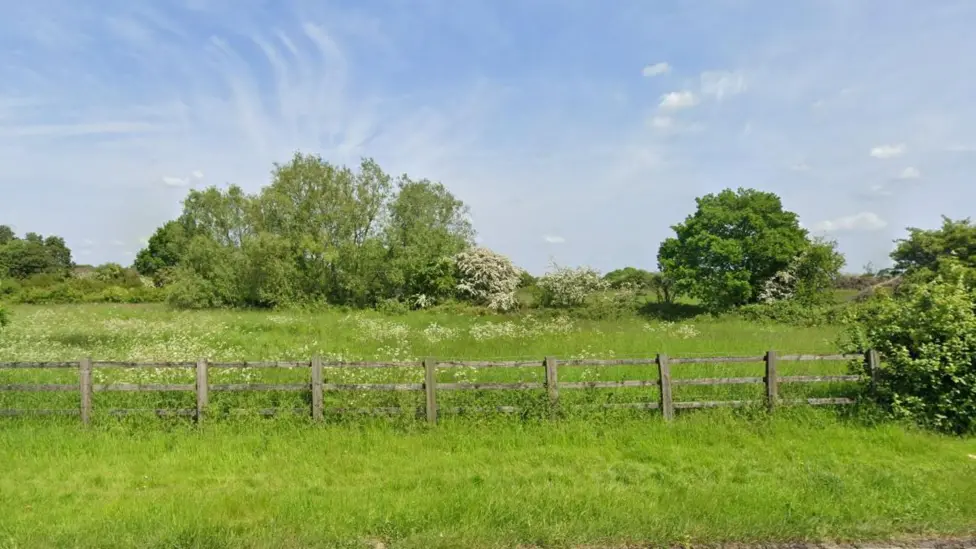
The developer's appeal of Wiltshire Council's decision was rejected - Image © Google
A final attempt to get planning permission for houses on a prehistoric site near a bat colony has failed.
Last year, Drynham Lane Ltd applied for permission to build 40 houses on land near Drynham Lane in Trowbridge.
The developer appealed to the Planning Inspectorate after its initial application was rejected by Wiltshire Council, according to the Local Democracy Reporting Service.
But planning inspector Hollie Nicholls ruled the scheme could have a "direct effect on the relevant bat population...and quality of the habitats they use". While she agreed more housing was needed in the area, she said this did not justify the environmental risks.
Developers had argued to the inspector that the council's policy on bat protection was "inconsistent".
(BBC article continues)
The developer's appeal of Wiltshire Council's decision was rejected - Image © Google
A final attempt to get planning permission for houses on a prehistoric site near a bat colony has failed.
Last year, Drynham Lane Ltd applied for permission to build 40 houses on land near Drynham Lane in Trowbridge.
The developer appealed to the Planning Inspectorate after its initial application was rejected by Wiltshire Council, according to the Local Democracy Reporting Service.
But planning inspector Hollie Nicholls ruled the scheme could have a "direct effect on the relevant bat population...and quality of the habitats they use". While she agreed more housing was needed in the area, she said this did not justify the environmental risks.
Developers had argued to the inspector that the council's policy on bat protection was "inconsistent".
(BBC article continues)
| Re: Aberfan disaster - 21 October 1966 (split topic from another discussion) In "The West - but NOT trains in the West" [374979/31667/31] Posted by Chris from Nailsea at 00:06, 10th May 2026 | |
From the BBC:
I took one of the most famous photos of the Aberfan disaster – it still haunts me
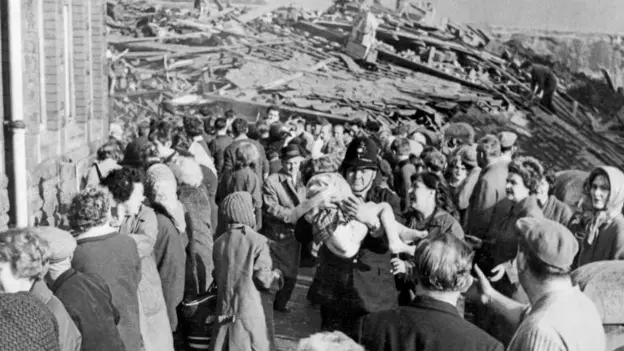
Susan Maybank is carried by PC Victor Jones, in a photo taken by Mel Parry after the Aberfan disaster - Image © Getty Images
This story contains upsetting details that some may find distressing
It's one of the most famous photographs capturing the aftermath of the Aberfan disaster, but its success has come to haunt the man who took it.
Mel Parry was an 18-year-old apprentice photographer with the Merthyr Express newspaper when he found himself in the south Wales village on his way to work.
He began documenting one of the darkest days in Welsh history when a colliery spoil tip collapsed, slid down a mountain and engulfed the village's primary school and surrounding houses, killing 116 children and 28 adults and leaving a lasting scar in Wales.
In the photo, PC Victor Jones can be seen carrying eight-year-old Susan Maybank to safety. The woman to the right is Susan's aunt.
Parry snapped the image but "wished he'd never taken it", later abandoning his career as a photographer.
In December 1966, the picture won the British News Photographer of the Year award, but Parry said he put the success of the image down to chance.
He had been on a bus travelling through Aberfan when someone shouted that the school had fallen down. "I happened to be the person on the spot, unfortunately."
With only one roll of film in his camera, he borrowed more from the chemist and began taking photos almost immediately.
One frame would come to define the tragedy on newspaper front pages around the world, though Parry did not realise it at the time. "I never, ever remember taking it. The camera was above my head and upside down. I couldn't see what I was taking," he said.
The PC in the image was Aberfan's local officer. Susan Maybank is in his arms. Her body is limp and she is barefoot. Around them a crowd of relatives and rescuers look on.
The film was rushed away by a young Western Mail reporter, Alun Michael, who would later become Wales' first first minister - he'd raced to the scene from Cardiff.
Parry spotted his colleague from the sister paper. "He threw the film across the line of miners. He didn't even know he'd taken it," Michael recalls.
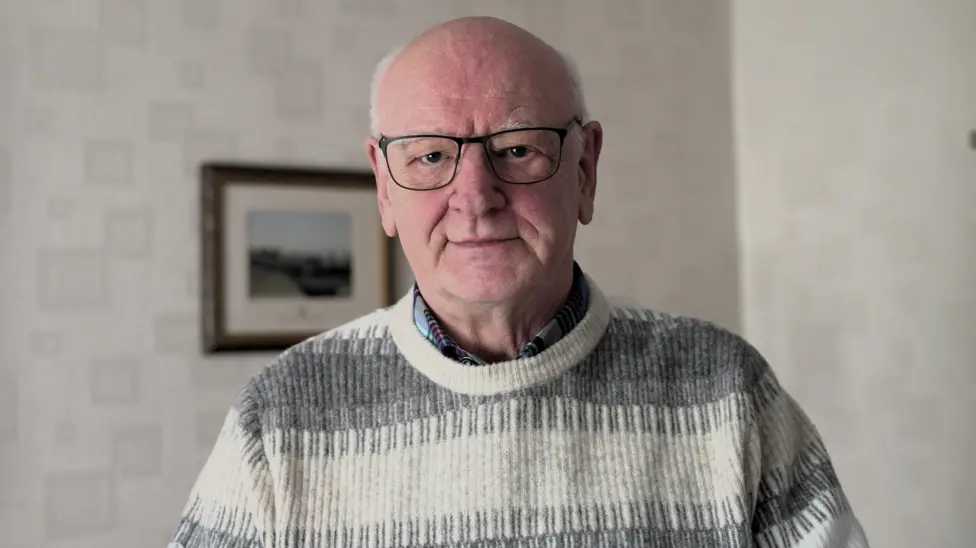
Despite his photo of Susan Maybank's rescue appearing on front pages and winning awards, Mel Parry says he wished he'd never taken it
Within hours, the photograph was printed on the front page of the South Wales Echo, and soon after appeared in newspapers around the world. The picture brought recognition for Parry, making him the youngest ever recipient of the British News Photographer of the Year award.
But the success always sat uneasy with him and contributed to his decision to abandon his photography career in the early 1970s. "It's a tragedy and unfortunately I ended up gaining from it," he said. "I wish I'd never taken it."
Days after the disaster, when his journalistic instinct had subsided, the enormity of the tragedy became clear. He had family in Aberfan and lost two cousins in the disaster.
"They were digging people out and unfortunately some were alive and some were dead. It's not something I would ever, ever want to go through again," Parry said.
Ahead of the 60th anniversary of the Aberfan disaster, Parry's photograph remains one of the defining images of the tragedy.
Will Troughton, curator of photography at the National Library of Wales, said its power lies in both its composition and its emotion.
"It is a very strong composition, which really makes people look at the picture and take in the detail. Your eye is drawn along the two rows of people and it's then you see the policeman holding the little girl." He added that the people are "looking stunned, they don't know what's happening, and in the middle of it, you've got this spark of hope".
Michael said the photograph captured something beyond the rescue of Susan that day. "It's a memory of the horror... but also the sense of pride."
Mine rescue workers and volunteers from across south Wales had rushed to help, digging through the debris. That sense of community "is one of the biggest strengths we have as a nation," Michael added.
Susan Maybank survived the disaster and was later reunited for tea with PC Jones and Parry. She died in 2025, and her family has chosen not to speak publicly.
The image remains inescapable for Parry as it reappears with every anniversary and retelling of the Aberfan disaster. "As I get older I get fed up with seeing the photograph. But when people see that photograph they can remember Aberfan and they can remember what was there, and I hope that out of that something good will come."
After being interviewed by BBC Wales, Parry decided to donate the photography award he received to Amgueddfa Cymru, Wales's national museum, which has collected items associated with the Aberfan disaster.
Susan Maybank is carried by PC Victor Jones, in a photo taken by Mel Parry after the Aberfan disaster - Image © Getty Images
This story contains upsetting details that some may find distressing
It's one of the most famous photographs capturing the aftermath of the Aberfan disaster, but its success has come to haunt the man who took it.
Mel Parry was an 18-year-old apprentice photographer with the Merthyr Express newspaper when he found himself in the south Wales village on his way to work.
He began documenting one of the darkest days in Welsh history when a colliery spoil tip collapsed, slid down a mountain and engulfed the village's primary school and surrounding houses, killing 116 children and 28 adults and leaving a lasting scar in Wales.
In the photo, PC Victor Jones can be seen carrying eight-year-old Susan Maybank to safety. The woman to the right is Susan's aunt.
Parry snapped the image but "wished he'd never taken it", later abandoning his career as a photographer.
In December 1966, the picture won the British News Photographer of the Year award, but Parry said he put the success of the image down to chance.
He had been on a bus travelling through Aberfan when someone shouted that the school had fallen down. "I happened to be the person on the spot, unfortunately."
With only one roll of film in his camera, he borrowed more from the chemist and began taking photos almost immediately.
One frame would come to define the tragedy on newspaper front pages around the world, though Parry did not realise it at the time. "I never, ever remember taking it. The camera was above my head and upside down. I couldn't see what I was taking," he said.
The PC in the image was Aberfan's local officer. Susan Maybank is in his arms. Her body is limp and she is barefoot. Around them a crowd of relatives and rescuers look on.
The film was rushed away by a young Western Mail reporter, Alun Michael, who would later become Wales' first first minister - he'd raced to the scene from Cardiff.
Parry spotted his colleague from the sister paper. "He threw the film across the line of miners. He didn't even know he'd taken it," Michael recalls.
Despite his photo of Susan Maybank's rescue appearing on front pages and winning awards, Mel Parry says he wished he'd never taken it
Within hours, the photograph was printed on the front page of the South Wales Echo, and soon after appeared in newspapers around the world. The picture brought recognition for Parry, making him the youngest ever recipient of the British News Photographer of the Year award.
But the success always sat uneasy with him and contributed to his decision to abandon his photography career in the early 1970s. "It's a tragedy and unfortunately I ended up gaining from it," he said. "I wish I'd never taken it."
Days after the disaster, when his journalistic instinct had subsided, the enormity of the tragedy became clear. He had family in Aberfan and lost two cousins in the disaster.
"They were digging people out and unfortunately some were alive and some were dead. It's not something I would ever, ever want to go through again," Parry said.
Ahead of the 60th anniversary of the Aberfan disaster, Parry's photograph remains one of the defining images of the tragedy.
Will Troughton, curator of photography at the National Library of Wales, said its power lies in both its composition and its emotion.
"It is a very strong composition, which really makes people look at the picture and take in the detail. Your eye is drawn along the two rows of people and it's then you see the policeman holding the little girl." He added that the people are "looking stunned, they don't know what's happening, and in the middle of it, you've got this spark of hope".
Michael said the photograph captured something beyond the rescue of Susan that day. "It's a memory of the horror... but also the sense of pride."
Mine rescue workers and volunteers from across south Wales had rushed to help, digging through the debris. That sense of community "is one of the biggest strengths we have as a nation," Michael added.
Susan Maybank survived the disaster and was later reunited for tea with PC Jones and Parry. She died in 2025, and her family has chosen not to speak publicly.
The image remains inescapable for Parry as it reappears with every anniversary and retelling of the Aberfan disaster. "As I get older I get fed up with seeing the photograph. But when people see that photograph they can remember Aberfan and they can remember what was there, and I hope that out of that something good will come."
After being interviewed by BBC Wales, Parry decided to donate the photography award he received to Amgueddfa Cymru, Wales's national museum, which has collected items associated with the Aberfan disaster.
That BBC article has more detail, for those interested.
| History of Bristol - Second World War bombing: one hour & five minutes of video In "The West - but NOT trains in the West" [374978/32007/31] Posted by Chris from Nailsea at 23:23, 9th May 2026 | |
Not related to the railways, particularly. History of Bristol - from YouTube at https://www.youtube.com/watch?v=YuH5R9kf54A
| Re: On tour, May 2026, Grahame In "The Lighter Side" [374977/31997/30] Posted by Chris from Nailsea at 21:52, 9th May 2026 | |
Thanks for your post, johnneyw.

Just to add some historic detail here - from Wikipedia: https://en.wikipedia.org/wiki/Maunsell_Forts
| Re: 13th December 2026 - Great Western returns to public ownership In "Across the West" [374976/31999/26] Posted by TaplowGreen at 21:50, 9th May 2026 | |
(Asking more in hope than expectation) - can anyone tell me how this, and GBR in general, will result in a better experience for customers?
If you read the articles in the railway press on the first integrated management structures set up in this current change, particularly the article on the Greater Anglia one in the May edition of Modern Railways, I think you will see the sort of savings that the management believe can be made through integration.
How would that result in a better experience for customers?
| Re: On tour, May 2026, Grahame In "The Lighter Side" [374975/31997/30] Posted by johnneyw at 21:44, 9th May 2026 | |
Indeed - Flushing / Vlissingen - same place, old and new names. Olau line used to run a ferry from here to Sheerness.
Indeed, I recall a short break in Middleburg using that route in the early 90s. The sea forts off the Kent coast made an imposing sight as we passed them in the mist.
| Re: The 08:19 only runs on alternate Saturdays In "Media about railways, and other means of transport" [374974/32006/49] Posted by Chris from Nailsea at 21:22, 9th May 2026 | |
| Re: New Oxford - Bristol direct service, ongoing developments and discussion In "Oxford, Didcot and Reading from the West" [374973/28355/22] Posted by ellendune at 21:16, 9th May 2026 | |
Rich Wilcox has tweeted/x'd -
Suspect that level crossing work will delay the service starting....
The ORR has approved GWR's bid to run two-hourly Weekday and Saturday services from Bristol to Oxford.
However, Network Rail has to implement risk measures at 13 level crossings before any GWR services can start
This only for a trial period - to end 2027 & ORR is quite clear that a "strong presumption of continuation of rights does NOT apply"
However, Network Rail has to implement risk measures at 13 level crossings before any GWR services can start
This only for a trial period - to end 2027 & ORR is quite clear that a "strong presumption of continuation of rights does NOT apply"
Suspect that level crossing work will delay the service starting....
By 2027 we can expect that GBR will determine whether these services continue not ORR.
| Re: New Oxford - Bristol direct service, ongoing developments and discussion In "Oxford, Didcot and Reading from the West" [374972/28355/22] Posted by bobm at 20:55, 9th May 2026 | |
Given those crossings were flagged in paragraph 12 of this document a year ago, I wonder how far that work has got.
https://www.orr.gov.uk/sites/default/files/2025-11/gwr-ltd-s22a-301st-sa-network-rail-representations.pdf
