








| Rude names, railways and mass trespass - how Peak District became tourist site Posted by Chris from Nailsea at 17:36, 21st April 2026 |     |
From the BBC:
Rude names, railways and a mass trespass - how the Peak District became a tourist attraction
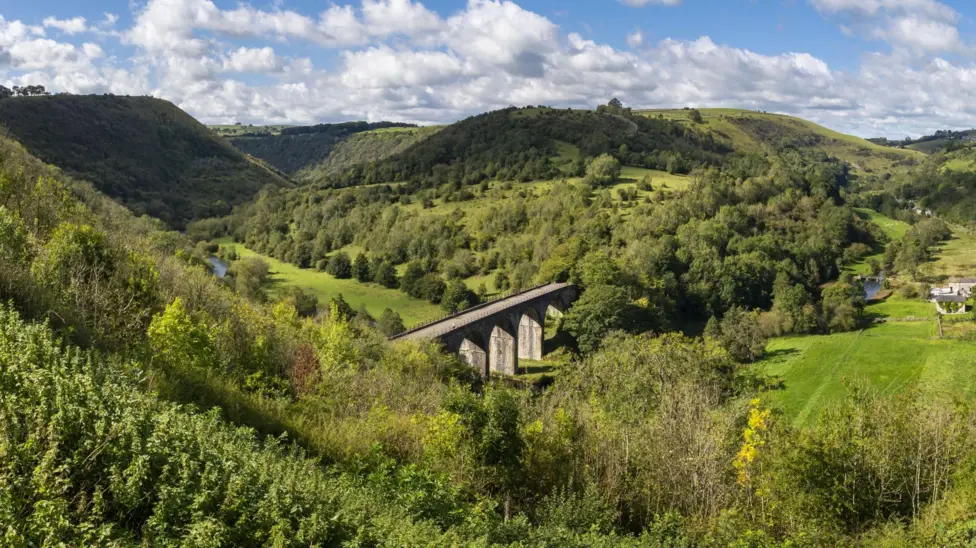
Some of the former Peak District railway lines are now walking routes, like the Monsal Trail
The Peak District became the UK's first national park 75 years ago, but the area has been attracting visitors for much longer.
One of the oldest tourist attractions is the Devil's Arse - one of four caves in Castleton that are accessible to the public. "It makes a huge farting noise basically," says John Harrison, director of the site, as he explains where its name originates.
"It was always known as the Devil's Arse and then in Victorian times, with their sort of prudish outlook on life, it became offensive. They changed it to the Devil's Hole - which is probably worse - and then Peak's Hole and then Peak Cavern. When we took it on it was Peak Cavern and we changed it back to the Devil's Arse."
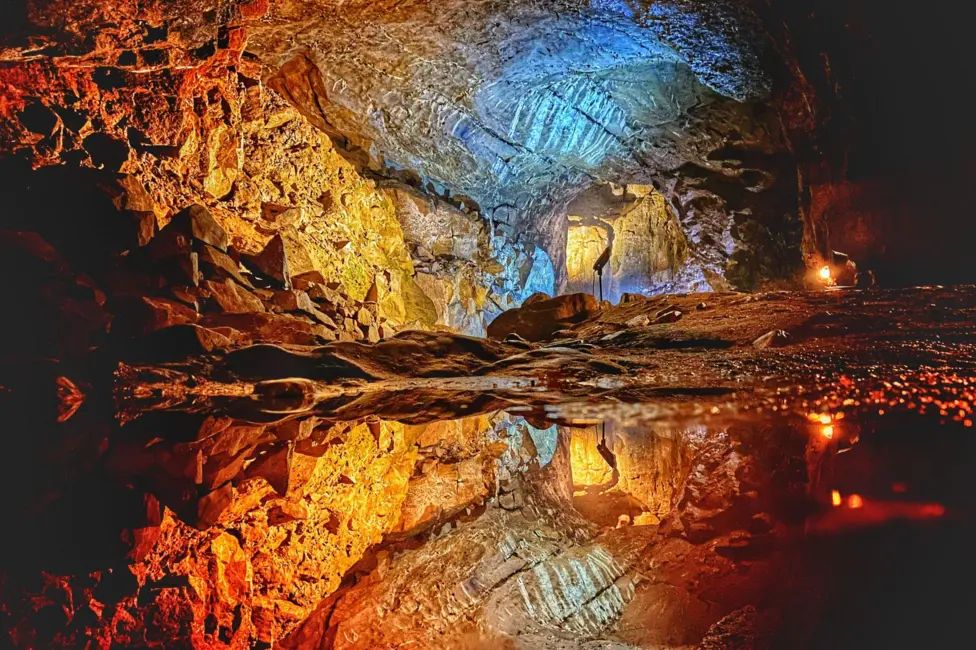
Tourists have been visiting the Devil's Arse for centuries
When the cave floods, the rising and falling of the water sucks through air and makes a sound uncannily similar to flatulence. "It can flood two or three times a year - sometimes more, it depends on the weather - but it's happening more often at the minute, so it's being heard more regularly," says John.
The Devil's Arse was named as one of Seven Wonders of the Peak back in 1636, in a book by philosopher Thomas Hobbes, which shows people have been visiting the cave and the wider Peak District for centuries.
"They tended to be very well-heeled gentry who'd come and stay at the likes of places like Chatsworth and be taken on a tour of the Peak District," says John. But then railways came along in the 19th Century - including the line that connects Manchester and Sheffield, which opened in 1894 and is still known for its incredible scenery.
"That opened up the Hope Valley to mass tourism," says John. "People could come out of the cities, out of Sheffield, out of Manchester, and have a day out in the Peak District and get home all in good time."
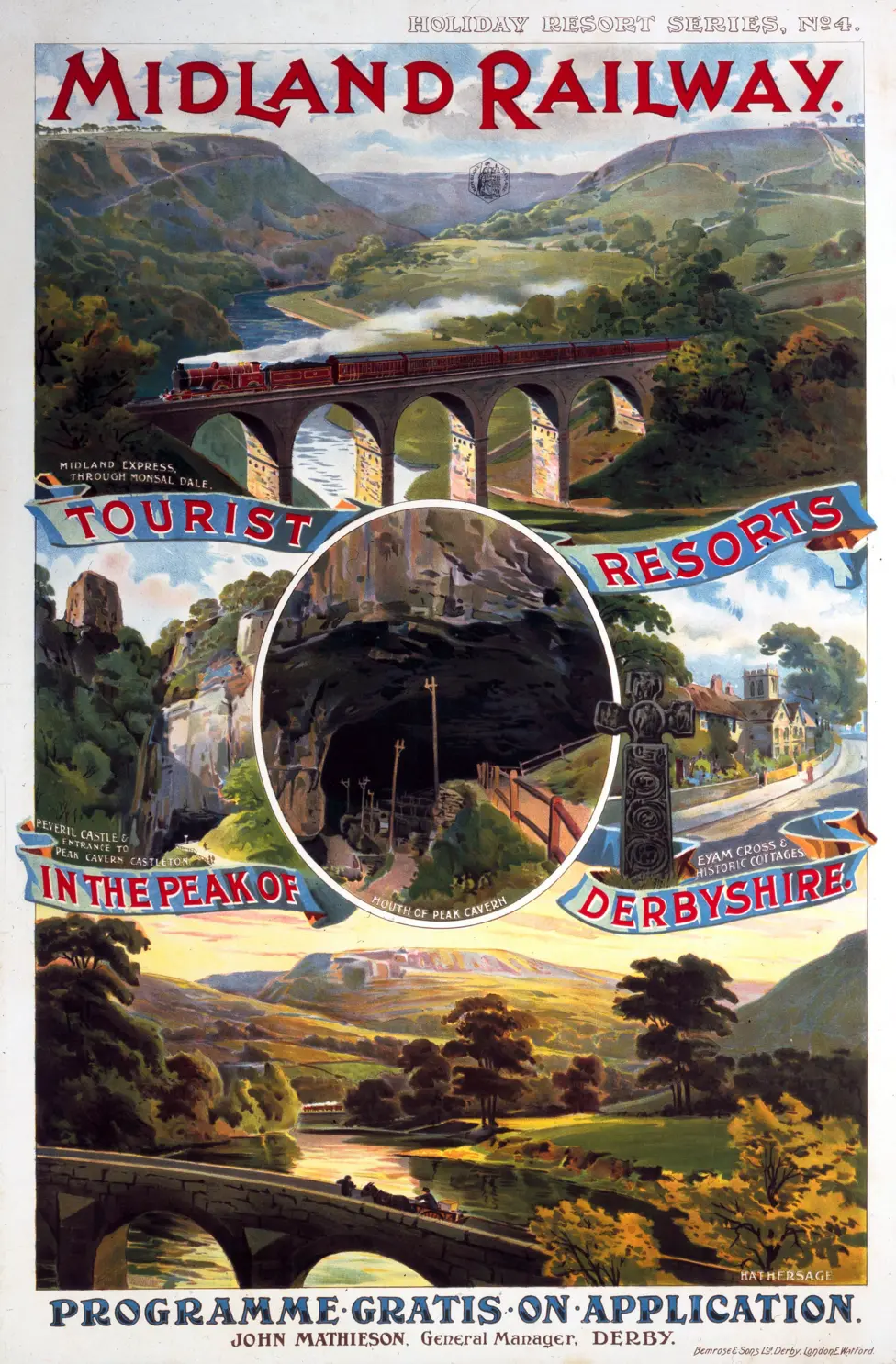
Railway companies promoted the Peak District as a place to visit before it became a national park
Railway companies promoted the idea of visiting the Peak District for leisure, but people could not access as much of the area as they can today. This was because much of it was privately owned, and many landowners did not want people rambling through. Tensions were highlighted in 1932 by the mass trespass of Kinder Scout, moorland kept exclusively for grouse shooting by its owner, the Duke of Devonshire.
Organised by the British Workers' Sports Federation, the aim of the mass trespass was to fight against "the finest stretches of Moorlands being closed to us", according to a notice encouraging people to join. Hundreds of people took part, and five were imprisoned for between two and six months after being charged with unlawful assembly and breach of the peace.
...
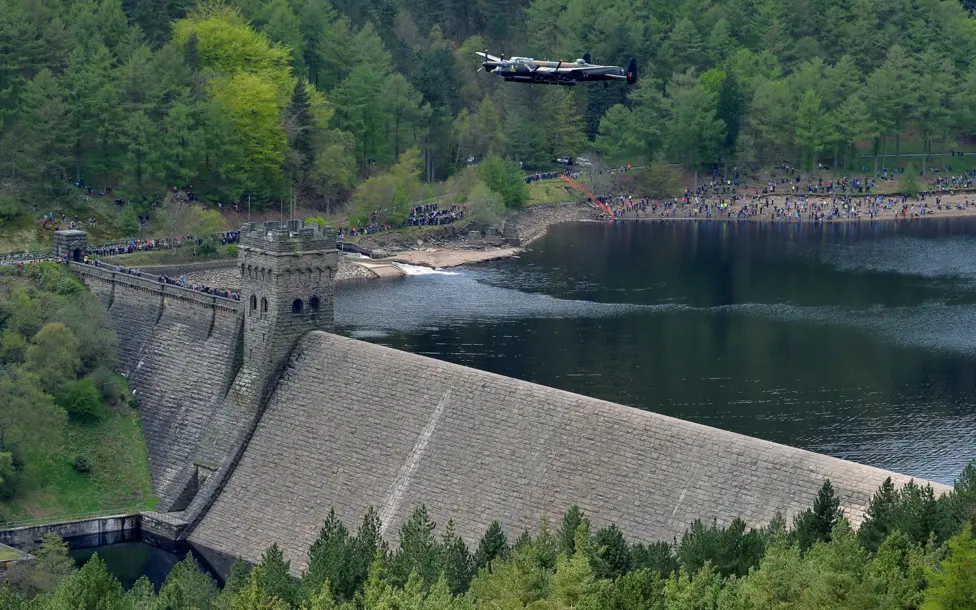
Reservoirs in the Peak District were used as the training ground for the Dambusters in World War Two, as remembered in 2013
(BBC article continues)
Some of the former Peak District railway lines are now walking routes, like the Monsal Trail
The Peak District became the UK's first national park 75 years ago, but the area has been attracting visitors for much longer.
One of the oldest tourist attractions is the Devil's Arse - one of four caves in Castleton that are accessible to the public. "It makes a huge farting noise basically," says John Harrison, director of the site, as he explains where its name originates.
"It was always known as the Devil's Arse and then in Victorian times, with their sort of prudish outlook on life, it became offensive. They changed it to the Devil's Hole - which is probably worse - and then Peak's Hole and then Peak Cavern. When we took it on it was Peak Cavern and we changed it back to the Devil's Arse."
Tourists have been visiting the Devil's Arse for centuries
When the cave floods, the rising and falling of the water sucks through air and makes a sound uncannily similar to flatulence. "It can flood two or three times a year - sometimes more, it depends on the weather - but it's happening more often at the minute, so it's being heard more regularly," says John.
The Devil's Arse was named as one of Seven Wonders of the Peak back in 1636, in a book by philosopher Thomas Hobbes, which shows people have been visiting the cave and the wider Peak District for centuries.
"They tended to be very well-heeled gentry who'd come and stay at the likes of places like Chatsworth and be taken on a tour of the Peak District," says John. But then railways came along in the 19th Century - including the line that connects Manchester and Sheffield, which opened in 1894 and is still known for its incredible scenery.
"That opened up the Hope Valley to mass tourism," says John. "People could come out of the cities, out of Sheffield, out of Manchester, and have a day out in the Peak District and get home all in good time."
Railway companies promoted the Peak District as a place to visit before it became a national park
Railway companies promoted the idea of visiting the Peak District for leisure, but people could not access as much of the area as they can today. This was because much of it was privately owned, and many landowners did not want people rambling through. Tensions were highlighted in 1932 by the mass trespass of Kinder Scout, moorland kept exclusively for grouse shooting by its owner, the Duke of Devonshire.
Organised by the British Workers' Sports Federation, the aim of the mass trespass was to fight against "the finest stretches of Moorlands being closed to us", according to a notice encouraging people to join. Hundreds of people took part, and five were imprisoned for between two and six months after being charged with unlawful assembly and breach of the peace.
...
Reservoirs in the Peak District were used as the training ground for the Dambusters in World War Two, as remembered in 2013
(BBC article continues)
